

Engaging and Inspiring K-6 Learners
Who were your favorite teachers?
You've had life-changing experiences in the classroom that challenged you to succeed and inspired your passions. Now it's your turn to share that calling as a K-6 educator, a mentor, and a champion for lifelong learning.
Someday soon, a joyful student will answer that all-important question with your name — and you will have made that possible because of your time at Belhaven University.


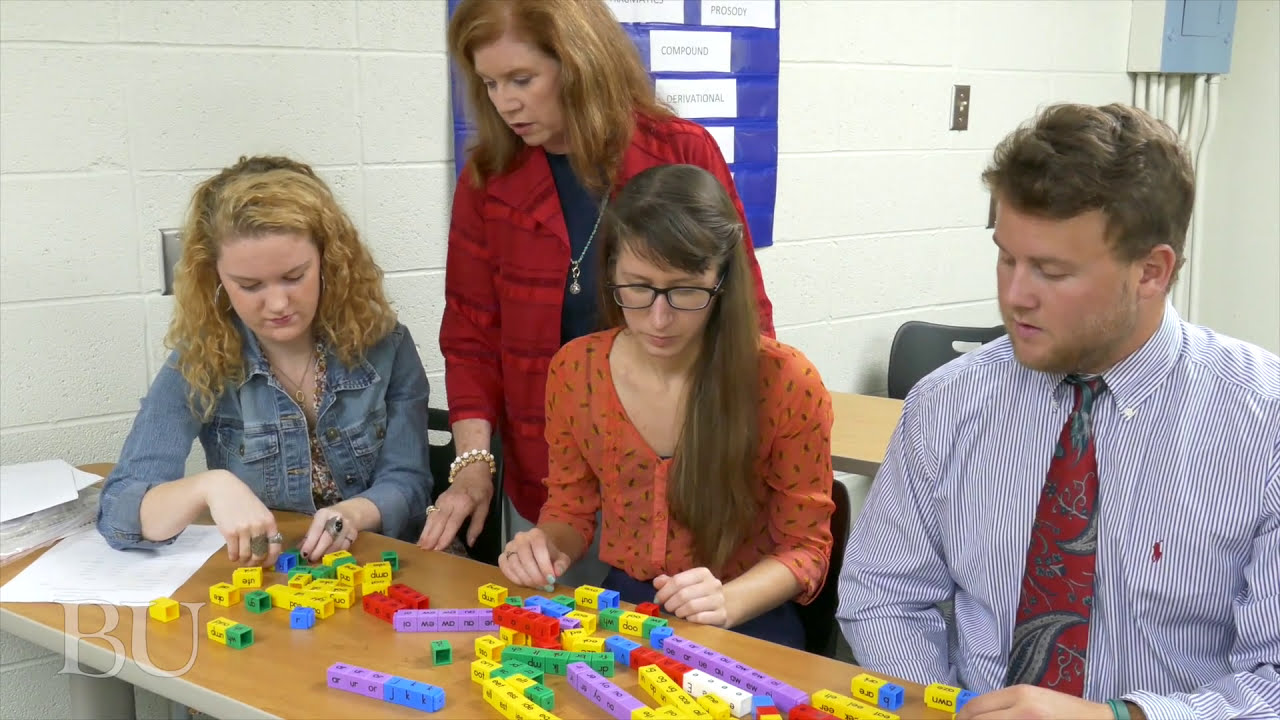
Instruction, Interaction, Immersion
Why You’ll Love Elementary Education at Belhaven
ELL Endorsement
Expand your outreach with expertise in teaching English language learners.
Experienced Mentors
Every course is taught by professional educators who've working in public and private schools.
Small Class Sizes
A 12:1 student/faculty ratio means instruction and interaction in a close-knit community.
High Demand For Talented Teachers
Public school districts and private institutions are hiring for every grade level.
10 Areas of Endorsement
Reading endorsement required; then choose from nine other focus areas
Fully Qualified
Our program aligns with multiple state and national professional standards
142 Years of Expertise
A leader in Christian education since 1883
MAAC Agreement
Mississippi Community College AA graduates can seamlessly transfer to BU
What Can You Do With a Major in Elementary Ed?
- Public and private schools in the local greater Jackson area school districts, throughout the state, and across the U.S. and beyond
- Preschools and other early childhood education programs
- International ministries and missions
- Educational agencies and research institutions
- Corporate and non-profit training
Majoring in Elementary Education also provides multiple pathways to secondary education certification, higher ed instruction, and school administration.
Learning to Teach, Teaching to Learn
When you graduate, you’ll be a professional educator qualified to teach in public or private schools. Some of the courses you will study:
- Child Development & the Characteristics of Children as Learners
- How Children Learn & How All Children Can Learn
- Curriculum Planning & Assessing Student Learning
- Developing Effective Learning Environments
- Classroom Management
- Clinical Classroom and School Observations
- Clinical Practice Student Teacher Internships
Many graduates return to Belhaven to earn advanced degrees in curriculum, school leadership, reading literacy, and more.
We want for you to understand that your story is part of the Great Story. So, you will be challenged to think critically and analytically to see how ideas and events fit together, how competing worldviews developed and how a Christ-centered understanding of the world has remained consistent throughout the ages. And, you will be equipped and encouraged to use your skills and abilities to fulfill your calling as you pursue a career that will bless the world and nourish your soul.
Learning to Teach, Teaching to Learn
When you graduate, you’ll be a professional educator qualified to teach in public or private schools. Some of the courses you will study:
- Child Development & the Characteristics of Children as Learners
- How Children Learn & How All Children Can Learn
- Curriculum Planning & Assessing Student Learning
- Developing Effective Learning Environments
- Classroom Management
- Clinical Classroom and School Observations
- Clinical Practice Student Teacher Internships
Many graduates return to Belhaven to earn advanced degrees in curriculum, school leadership, reading literacy, and more.
We want for you to understand that your story is part of the Great Story. So, you will be challenged to think critically and analytically to see how ideas and events fit together, how competing worldviews developed and how a Christ-centered understanding of the world has remained consistent throughout the ages. And, you will be equipped and encouraged to use your skills and abilities to fulfill your calling as you pursue a career that will bless the world and nourish your soul.
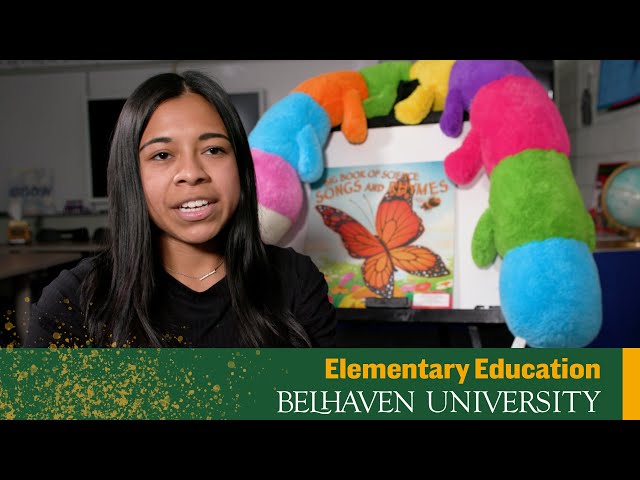
The Journey from from Students to Teachers
Our program emphasizes real-world experience through practicum and clinical hours, ensuring that candidates are well-prepared for the classroom environment. Belhaven equips its students with the skills and confidence to make a meaningful impact.
Majoring in Elementary Education: What You Need to Know
You’re allowed to take only a limited number of courses as a pre-education candidate before you can apply for the Teacher Educator Preparation Program (TEPP). Admission to Belhaven University and being a pre-education major does not automatically admit you to the Teacher Educator Preparation Program (TEPP).
You’ll be accepted into TEPP when you:
- Pass the required Mississippi Teacher Educator Entrance Exams;
- Complete the required core education courses; and
- Successfully interview with the TEPP Candidate Approval Committee.
If you’re unable to meet these criteria, you can no longer take courses from the School of Education and will be required to change your major.
- Structured observation of a variety schools and classrooms in diverse learning environments, as well as diverse student populations
- Community involvement, field trips, fundraisers and service projects, tutoring and international travel for education or missions
- Clinical internships in local school districts
- Membership in professional school, teacher, and specialty subject associations
- Participation in National Education Honor Society
The Belhaven School of Education serving as the Educator Preparation Provider (EPP) has developed and maintains a conceptual framework that is integrated throughout the undergraduate and graduate educator preparation programs at both the initial and advanced levels.
The EPP Conceptual Framework is the result of collaborative efforts between the faculty, administration, partner schools, and professional education community to reflect the knowledge base, current research, best practices, and state and national standards.
View the Professional Licensure Programs page for more information since the professional licensure requirements vary from state to state.
Elementary Teacher Education (K–6)
Freshman Year
Fall Semester - Freshman Year *
| Course | Clinical / Field Hours | Credit Hours |
|---|---|---|
| BIB 220 – Old Testament Survey | 0 | 3 |
| SCI 126 – Science & Culture: Life Science | 0 | 4 |
| ENG 101 – Freshman English I | 0 | 3 |
| BU 101 – Belhaven Basics | 0 | 1 |
| Social Science Elective (SOC, PSY, HIS, PSC, ECO, HUM) | 0 | 3 |
| EDU 200 – Introduction to Education* | 0 | 3 |
| EDU 202 – Education Seminar | 0 | P/F |
| Semester Total | 17 | |
* To take Education courses, a candidate is required to have at a minimum a GPA of 2.75 or an ACT score of 21 or higher.
Spring Semester - Freshman Year
| Course | Clinical / Field Hours | Credit Hours |
|---|---|---|
| BIB 221 – New Testament | 0 | 3 |
| ENG 102 – Freshman English II | 0 | 3 |
| MAT 101 – College Algebra | 0 | 3 |
| SCI 125 – Science & Culture: Physical Science | 0 | 4 |
| EDU 301 – Educational Psychology | 0 | 3 |
| EDU 202 – Education Seminar | 0 | P/F |
| Semester Total | 16 | |
Sophomore Year
Fall Semester - Sophomore Year
| Course | Clinical / Field Hours | Credit Hours |
|---|---|---|
| ENG 225 – Ancient Literature | 0 | 3 |
| HIS 225 – Ancient History | 0 | 3 |
| HUM 225 – Biblical Themes I | 0 | 1 |
| MAT 110 – Concepts of Mathematics | 0 | 3 |
| EDU 221 – Child Development | 15 Field Hours | 3 |
| Fine Arts Elective (ART 215, MUS 120, THE 120) | 0 | 3 |
| EDU 202 – Education Seminar | 0 | P/F |
| Semester Total | 16 | |
Spring Semester - Sophomore Year
| Course | Clinical / Field Hours | Credit Hours |
|---|---|---|
| HIS 226 – Enlightenment to 18th Century | 0 | 3 |
| ENG 226 – Enlightenment to 18th Century | 0 | 3 |
| HUM 226 – Biblical Themes II | 0 | 1 |
| Social Science Elective | 0 | 3 |
| EDU 309 – Classroom Management | 0 | 3 |
| EDU 342 – Exceptional Learner | 7 Field Hours | 3 |
| EDU 202 – Education Seminar | 0 | 1 |
| Semester Total | 17 | |
During the Spring Semester of their Sophomore Year, a TEPP Admission Interview is required of all candidates wanting to continue in Education and become a Teacher Candidate in the Teacher Educator Preparation Program (TEPP).
Junior Year - Teacher Preparation Program - TEPP
Officially the beginning of the Teacher Preparation Program as a Teacher Candidate.
Fall Semester - Junior Year
| Course | Clinical / Field Hours | Credit Hours |
|---|---|---|
| Endorsement Area Course | 0 | 3 |
| Endorsement Area Course or Elective | 0 | 3 |
| REA 323 – Early Literacy I | 15 Field Hours | 3 |
| REA 311 – Literature-Based Reading | 0 | 3 |
| EDU 331 – Planning, Assessment & Data Analysis | 0 | 3 |
| Semester Total | 15 | |
Spring Semester - Junior Year
| Course | Clinical / Field Hours | Credit Hours |
|---|---|---|
| Endorsement Area Course or Elective | 0 | 3 |
| REA 328 – Reading/Writing Across the Curriculum | 0 | 3 |
| REA 324 – Early Literacy II | 15 Field Hours | 3 |
| REA 326 – Diagnostic Reading | 8 Field Hours | 3 |
| EDU 307 – Science, PE & Health for Children | 0 | 3 |
| Semester Total | 15 | |
Senior Year
Fall Semester - Senior Year
| Course | Clinical / Field Hours | Credit Hours |
|---|---|---|
| Endorsement Area Course or Elective | 0 | 3 |
| EDU 400 – Clinical Practice I | 120 Internship Hours | 6 |
| EDU 304 – Social Studies for Children | 0 | 3 |
| EDU 308 – Mathematics for Children | 10 Field Hours | 3 |
| Semester Total | 15 | |
Spring Semester - Senior Year
| Course | Clinical / Field Hours | Credit Hours |
|---|---|---|
| WVC 401 – Kingdom Life | 0 | 3 |
| EDU 401 – Clinical Practice II (Student Teaching) | 600 Clinical Internship Hours* | 10 |
| Semester Total | 13 | |
* Clinical Internship also known as Student Teaching (One Full Semester)
Licensure Testing Requirements
- Praxis - Principles of Learning and Teaching (PLT #5622): 160+
- Praxis – Curriculum, Instruction, and Assessment (CIA #5017): 153+
- Foundations of Reading Test: 233+
Tests are not required for graduation; however, no test = no teacher license.
Candidates may graduate without being recommended for licensure if testing requirements are not met.
Policy & Endorsement Requirements
Elementary education majors are required to have two areas of endorsement. Reading (Code 174) is the required first endorsement (15 hours), which is embedded in the program.
An additional endorsement requires 18 hours in a subject content area. This allows candidates to be eligible to teach that subject in grades 7–12. Students should consult their academic advisor to ensure courses align with Mississippi Department of Education (MDE) requirements.
MDE requires both the Reading Endorsement and an additional endorsement before candidates can be recommended for licensure.
Total Degree Hours: 124

Free Master's Degree
Belhaven is the only university in the country to give traditional-campus students full-tuition scholarships for an online master’s degree! You can choose from one of our many high-demand master's degrees in education leading to advanced positions in education, higher salary, enhanced teaching skills, professional development and career advancement.
Additional Undergraduate School of Education Info
Future Teacher Scholarships for Elementary Education Majors
Belhaven University is proud to offer generous scholarships for future teachers pursuing a bachelor’s degree in Elementary Education.
Incoming freshmen who declare Elementary Education as their major and earn a minimum ACT score of 21 may qualify for one of the following housing and academic grant awards:
- $16,000 per year for qualifying incoming freshmen
- $17,500 per year for Teacher Academy graduates who meet the same eligibility requirements
When combined with Belhaven’s Free Master’s Offer, these scholarships create an outstanding value for future educators—supporting both undergraduate and graduate success in education.
Interested in teaching at the middle/high school level? Talk to your advisor about dual enrollment in the Secondary Teacher Certification Program, which leads to a Mississippi Middle and/or High School Teacher License.
If you’re majoring in Dance, Theatre, Music, or Visual Arts, you can earn a K-12 Five Year Renewable Teacher License after you complete your degree.
The Mississippi State Department of Education will issue a license after you’ve earned a bachelor’s degree in one of the approved performance or visual arts degree programs and you’ve met the state teacher test requirements.
In addition, you must have a qualifying ACT or Praxis Core Test score and successfully pass the Principles of Learning and Teaching (PLT) Test. There is no requirement for School of Education courses or Clinical Intern Student Teaching hours.
Special MDE Performance and Visual Arts Teacher License [PDF]
Public school teaching licenses are issued by the Mississippi Department of Education, Office of Educator Licensure, Jackson, Mississippi. Applications for licensure may be secured from the Dean of the School of Education. If you plan to teach in states other than Mississippi, you are responsible for securing all requirements and forms.
Admission to Belhaven University and being a Pre-Education Major in the School of Education DOES NOT automatically admit an individual to the Teacher Educator Preparation Program (TEPP).
View the requirements for admission to the TEPP Teacher Education Preparation Program [PDF]
Please note: As a Pre-Education Candidate in the School of Education, you may only take a limited number of courses before you must apply for admission into the Teacher Educator Preparation Program (TEPP).
Candidates are admitted to the TEPP after:
- Successfully passing the required Mississippi Teacher Educator Entrance Exams;
- Successfully completing the requisite education courses;
- Meeting and successfully interviewing with the School of Education TEPP Candidate Approval Committee; and
- Approval as a Teacher Candidate for the Belhaven Teacher Educator Preparation Program.
If you are not admitted to the TEPP, you can no longer take courses from the School of Education and will be required to change your major.
Belhaven University and the Mississippi Association of Community Colleges (MACC) have signed an agreement that provides Mississippi community college students a seamless pathway to earning their Bachelor of Science in Elementary Teacher Education. The agreement allows students with an Associate of Arts (AA) degree from any MACC institution to transfer directly into Belhaven University, where the AA degree will fulfill the first two years of the University’s Elementary Teacher Education Preparation Program.
Meet Our Faculty
Associate Professor of Education
Stacey Donaldson
Associate Professor of Education
Dean of the School of Education
David Hand
Dean of the School of Education
Assistant Professor of Education
Miki McCann
Assistant Professor of Education
Professor of Education; Director of the Master of Arts in Education Program
Rebekah Mincey
Professor of Education; Director of the Master of Arts in Education Program
Dean of Faculty for the School of Education and Chair of the School Leadership & Administration Program
J. Clay Norton
Dean of Faculty for the School of Education and Chair of the School Leadership & Administration Program
Associate Professor of Education/ Chair of Graduate Education
Mariella Simons
Associate Professor of Education/ Chair of Graduate Education
Assistant Professor of Education
Brittany Singleton
Assistant Professor of Education
Assistant Professor of Education and Undergraduate Education Chair
Tammy Smith
Assistant Professor of Education and Undergraduate Education Chair
Contact Us
Office of Admission
Phone: 601-968-5940Mailing Address:
1500 Peachtree Street, Box 153
Jackson, MS 39202
For campus visit:
Jimmy Hood Welcome Center
855 Riverside Drive
Jackson, MS 39202
Fax: 601-300-2932
Verse of the Year
Go and make disciples of all the nations ... And be sure of this: I am with you always, even to the end of the age.
Matthew 28:19-20