

Make Belhaven your home. We're a Christian university with top-rated faculty and an environment where you will thrive in your academic work and in your spiritual growth. You'll graduate ready to find satisfying work in your field.
On campus or online degree programs — Belhaven is your haven to prepare for future success.
Options for Students of All Ages, Backgrounds & Types
It doesn't matter if you're a new high school graduate or a mid-career professional. We have an academic program for you. Belhaven offers degrees from associate to doctorate. We offer specialized certificates and diplomas, too.
Our Christ-honoring faculty know their fields and how to mentor students in on-campus or online classes. We'll help you clarify God's vision for your life and apply it in powerful ways.


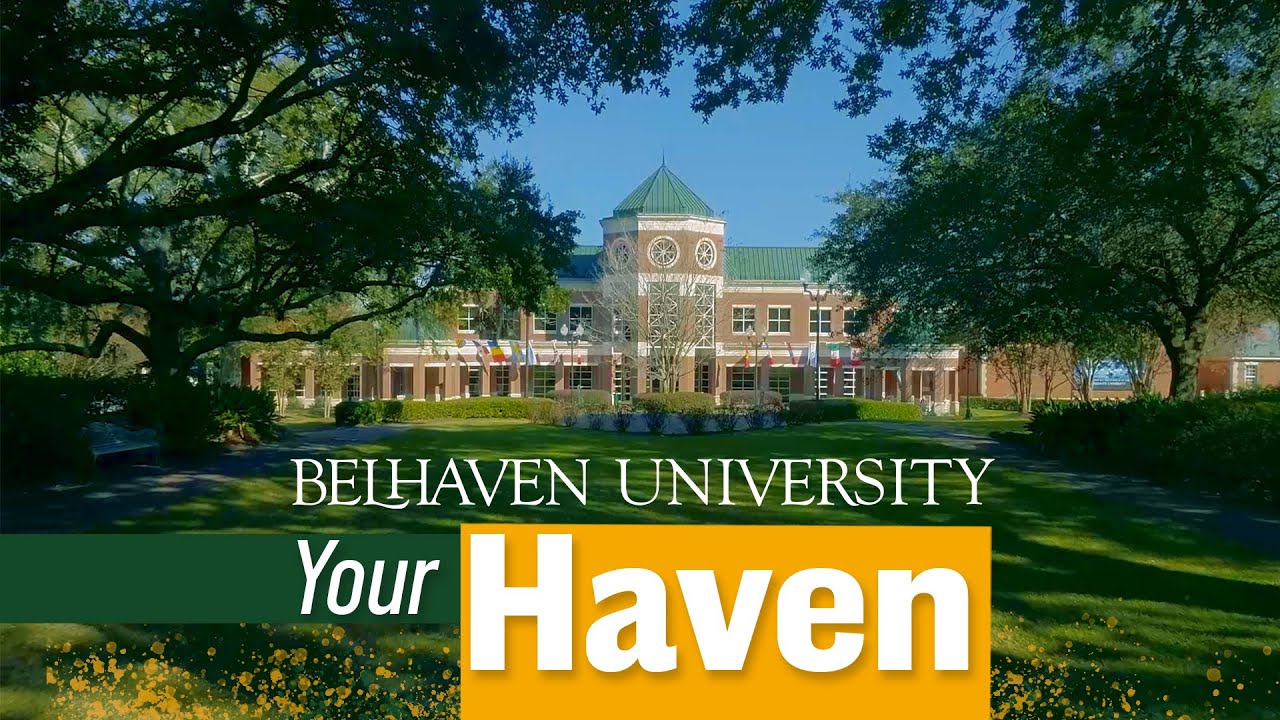
We are a Christian university committed to Biblical Truth and Godly Grace. We want our students to understand the world as God designed it and experience the fullness of a life modeled upon Jesus.
Why Belhaven?
Christian Worldview
You are challenged to think critically and analytically about who God is — and who you are — as we equip you to fulfill your calling to glorify God and be a blessing to the world.
13:1 Student-Faculty Ratio
Go to a place where your professors know your name and care about your success both inside and outside of the classroom. Our faculty members teach from experience and lead with compassion.
College of Distinction
For over a decade, Belhaven has been recognized as a College of Distinction and Christian College of Distinction recognizing Belhaven's vibrant community, engaged students, great teaching, character-building seminars and successful outcomes.
Competitive Tuition Rates
Don't let cost stand in the way of your educational goals. We're committed to offering tuition rates that are affordable. Plus, you may benefit from ample financial aid resources.

Belhaven: Specialized Accreditation in the Arts, Business, Education & Nursing
Belhaven is accredited by the Southern Commission on Schools and Colleges to award associate, bachelor’s, master’s, and doctoral degrees. Individual programs, including arts, business, education, nursing, and social work, are further recognized by accrediting agencies in their respective areas. These recognitions prove our ongoing commitment to academic excellence and quality standards.


Discover Your Calling
Your career is a calling from the Lord. Answer that call with a Belhaven education, where every program reflects a Christian worldview. Whether you are an undergrad student pursuing a degree on campus or looking for an online degree program to further your career, Belhaven University is the place to be to accomplish your higher education goals.

Recognized Excellence in Higher Education
Each year, prestigious organizations like U.S. News & World Report recognize Belhaven for our excellent on campus and online academic programs, top-rated faculty, and commitment to Christian service. These outside recognitions are further proof that Belhaven is the right choice for you.


College Is Affordable
You’re investing in your future when you enroll in college. Make sure you choose the college right for you. Learn more about the real costs of college and how you can make smart financial decisions that set you up for success.
Resources for your Belhaven Journey

Options: Study Abroad, Honors, ROTC & More
On-campus undergraduate students have a range of additional options. Some are part of what you think of as "the college experience." Others can open unexpected doors or challenge you to grow in new ways.
Verse of the Year
God is working in you, giving you the desire and the power to do what pleases Him.
Philippians 2:13