

Cultivating Wisdom and Virtue
Logical reasoning. Inspired analysis. Effective communication.
In the ancient world, the Greek philosophers sought the discovery of truth through the study of the natural realm. Christian scholars looked to God’s revelation for the access to truth as they studied who God is and what He created.
Major in Classical Education Studies at Belhaven University to gain a mastery of critical thinking, expressing complex concepts. You find new depths to key ideas and arguments throughout history. You engage in rigorous debate and explore the foundations of our Christian heritage.
When you graduate, you emerge with a genuine love of knowledge and the confidence to articulate your calling with clarity, creativity, and power.



Seeing All Truth as God's Truth
Why You'll Love Classical Education Studies at Belhaven
Highly Interdisciplinary
Few majors are so flexible. Focus on this dynamic major or combine with other disciplines for a minor or double major.
Challenging Careers
Our graduates work as entrepreneurs, teachers, linguists, missionaries, and community leaders.
Christian Worldview
You are challenged to think critically and analytically about who God is — and who you are — as we equip you to fulfill your calling to glorify God and be a blessing to the world.
Close-Knit Community
Small group interactions with faculty and peers create lifelong connections.
100% Double Majors
All of our Classical Education Majors graduate with a minimum of 2 Majors
13:1 Student to Teacher Ratio
Small classes encourage vigorous discussion and analysis
37 Hours For a CES major
The CES major allows for adding one or more additional majors
What Can You Do with a Classical Education Studies Major?
Majoring in Classical Education Studies is a great choice for students interested in advanced study in politics, religion, English, history, and the arts. This major also lays a strong foundation for law, medicine, seminary, and professional degrees.
Classical Education Studies major graduates pursue careers in:
- Public policy
- Linguistics
- Medicine
- Social advocacy
- Business
- Journalism
- Seminary & ministry
- Education
- Theater
- The arts
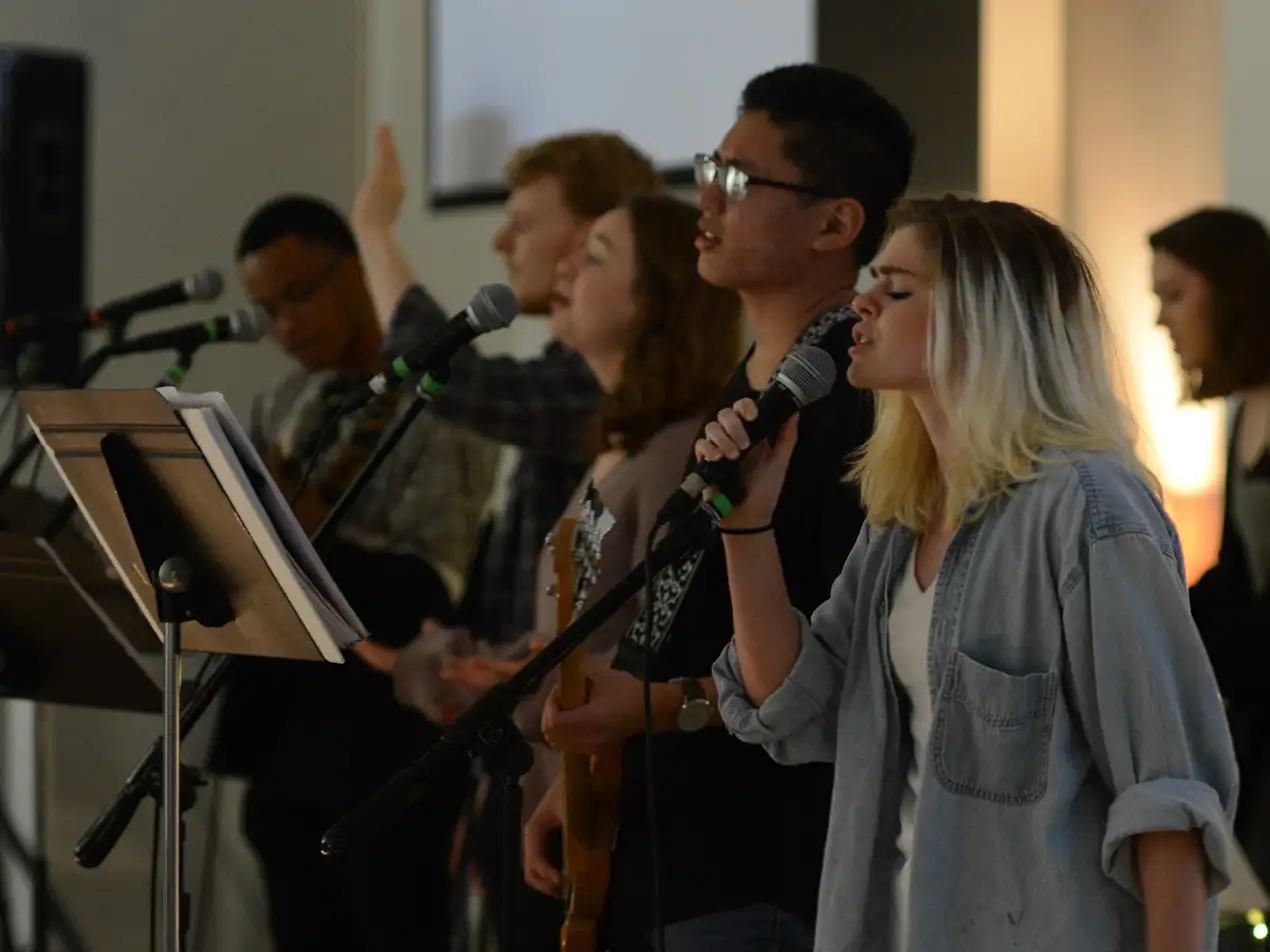
Chapel: Nourishment for the Soul
The Belhaven experience includes a weekly chapel service, which is an opportunity for the campus community to gather and explore the depths of God’s truth and love. Guest speakers offer unique viewpoints meant to inspire and mold our Christian walk. Attendance is required for full-time traditional undergraduate students.
A Community of Christian Scholars
What is a Classical Education?
The ancient Greeks called it the Trivium: Grammar, logic, and rhetoric.
At Belhaven, those fundamental skills are the foundation for deeper exploration of biblical truths and our place in the modern world.
- Logic: We assess the principles of correct reasoning.
- Ethics: We examine the origin of morality and analyze the consequences.
- Epistemology: We analyze the concept of knowledge and consider the origin of knowledge, how is it obtained, and what its limits are.
- Aesthetics: We look at the philosophy of art and contemplate the question of what is beauty, and the social, ethical, and religious role of the arts in human culture.
Together, we bring together these seemingly diverse topics into a coherent framework and examine them from the context of a biblical world view.
A Biblical Perspective of the Humanities
At Belhaven, every course begins with the basic principle that God is the Creator of all things, therefore He is the author of all truth and is a reflection of who He is.
Through the lens of the Trivium, the Classical Education Studies program strongly emphasizes our biblical foundations:
- Accurately understanding and interpreting ancient and modern thought;
- Examining the great thinkers throughout history, analyzing how their beliefs compare and contrast with a Christ-centered view of the world; and
- Expressing biblical truth in a rhetorically successful way.
You will be challenged and encouraged to continue to evaluate the implications of your studies in your personal and professional life as well as in the world of ideas.
A Community of Christian Scholars
What is a Classical Education?
The ancient Greeks called it the Trivium: Grammar, logic, and rhetoric.
At Belhaven, those fundamental skills are the foundation for deeper exploration of biblical truths and our place in the modern world.
- Logic: We assess the principles of correct reasoning.
- Ethics: We examine the origin of morality and analyze the consequences.
- Epistemology: We analyze the concept of knowledge and consider the origin of knowledge, how is it obtained, and what its limits are.
- Aesthetics: We look at the philosophy of art and contemplate the question of what is beauty, and the social, ethical, and religious role of the arts in human culture.
Together, we bring together these seemingly diverse topics into a coherent framework and examine them from the context of a biblical world view.
A Biblical Perspective of the Humanities
At Belhaven, every course begins with the basic principle that God is the Creator of all things, therefore He is the author of all truth and is a reflection of who He is.
Through the lens of the Trivium, the Classical Education Studies program strongly emphasizes our biblical foundations:
- Accurately understanding and interpreting ancient and modern thought;
- Examining the great thinkers throughout history, analyzing how their beliefs compare and contrast with a Christ-centered view of the world; and
- Expressing biblical truth in a rhetorically successful way.
You will be challenged and encouraged to continue to evaluate the implications of your studies in your personal and professional life as well as in the world of ideas.
Classical Education at Belhaven: What You Need to Know
- 4-year plan for Freshmen - Classical Education (pdf)
- 4-year plan for Transfers - Classical Education (pdf)
Classical Education Studies majors are eligible to participate in the Honors College. This interdisciplinary seminar explores diverse topics from the humanities, sciences, and arts.
Through reading and round-table discussion with faculty and peers, students will hone their ability to critically evaluate ideas from a Christian perspective and articulate discerning responses.
Beyond your core course, you choose a focus on other disciplines — Humanities, Arts, Education, Ministry & Human Services — to prepare for graduate studies or teacher certification.
Many students acquire teaching experience as a peer tutor or by assisting at a local classical school.

A Celebrated Haven for Education
Belhaven is accredited by the Southern Commission on Schools and Colleges to award associate, bachelor’s, master’s, educational specialist, and doctoral degrees. Individual programs, including arts, business, education, and nursing, are further recognized by accrediting agencies in their respective areas. These recognitions prove our ongoing commitment to academic excellence and quality standards.
Contact Us
Office of Admission
Phone: 601-968-5940Mailing Address:
1500 Peachtree Street, Box 153
Jackson, MS 39202
For campus visit:
Jimmy Hood Welcome Center
855 Riverside Drive
Jackson, MS 39202
Fax: 601-300-2932
Verse of the Year
Go and make disciples of all the nations ... And be sure of this: I am with you always, even to the end of the age.
Matthew 28:19-20