
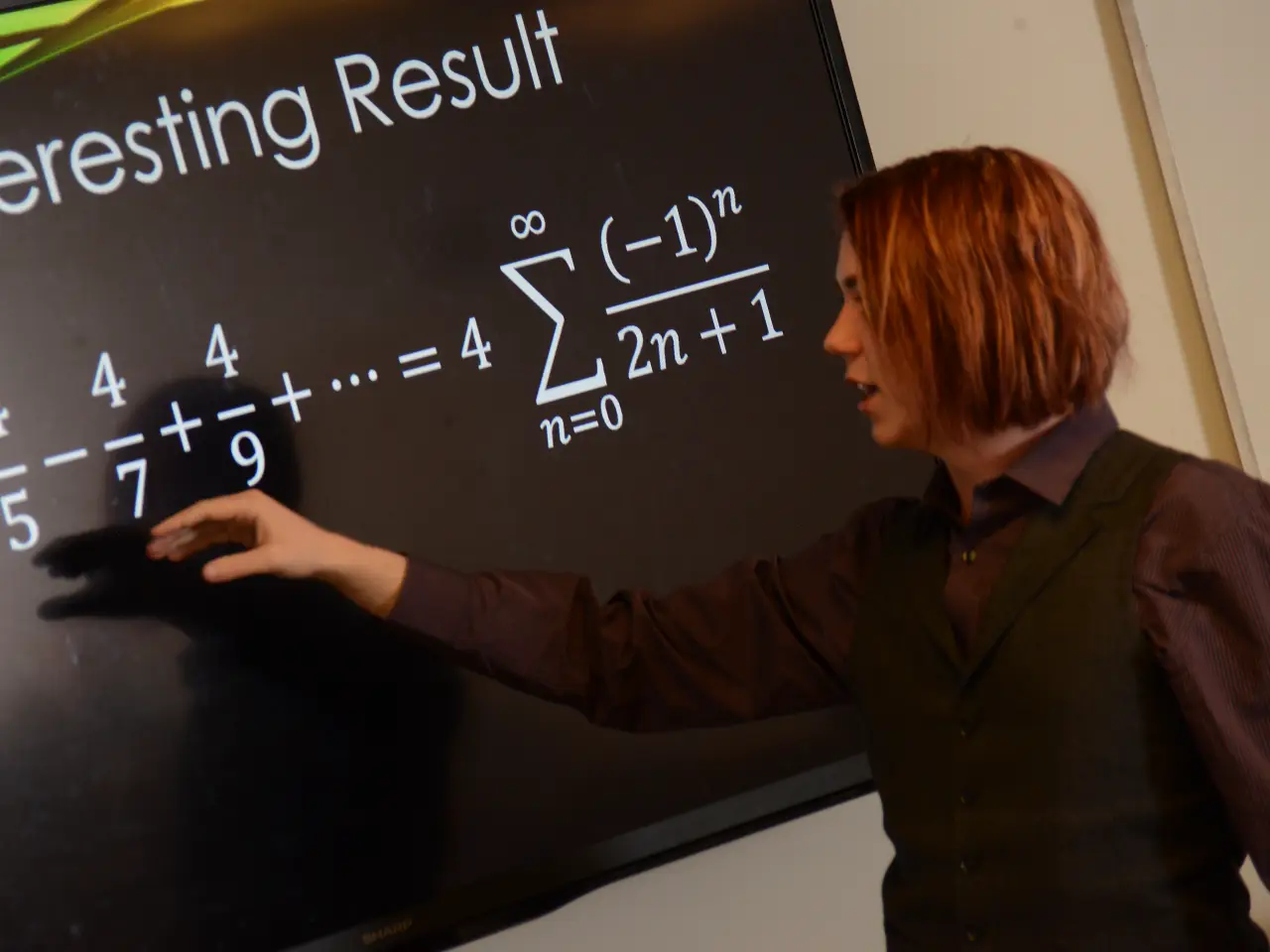
Learn the Language of Nature & Science
Math is the beautiful language of logic, problem-solving, and understanding God’s world. As a math student at Belhaven, you unlock many, many career possibilities. Plus, you benefit from a nurturing environment that prepares you for a challenging and rewarding future.


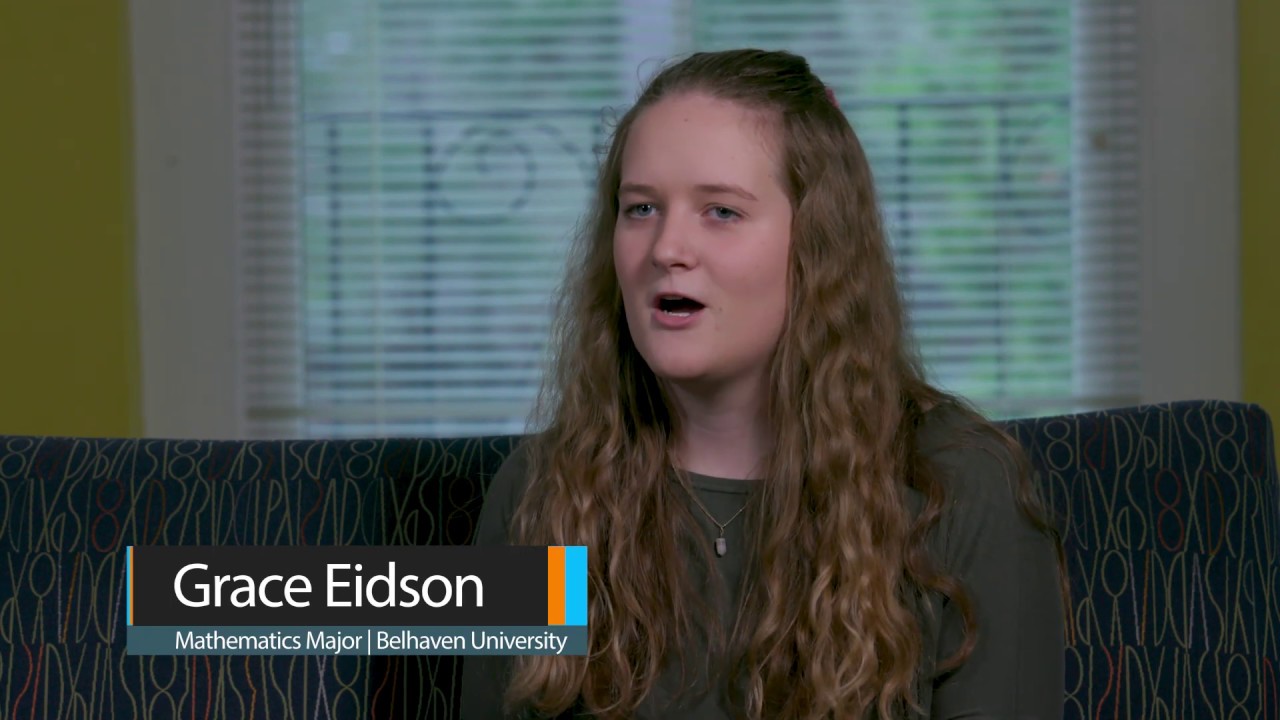
Why You’ll Love Mathematics at Belhaven
Caring Faculty
Our faculty members will be your mentors. They’re experts in their fields, and they’re dedicated to helping you understand complex subjects. They know you by name, and they push you to succeed at the highest level.
Strong Community
At Belhaven, we believe in community — and we develop it from day one. Join in with social events, friendly competitions, conferences, and more. You get to know your classmates and professors in meaningful, personal ways.
Academic Experiences
In and out of the classroom, you get opportunities for unique learning opportunities. Guest seminars, internships, site visits, and research projects increase learning, boosts your resume, and prepares for your career choice.
Technology Use
We bring new technology into the classroom from day one. With developing skills in 3D printing, Mathematica, microcontrollers, and others, you stand out in a world that’s growing increasingly tech dependent.
Hands-On From Day One
Technology integration right in the classroom. Ex: Mathematica, 3D Printing, Arduino, Geogebra
$3.90 Textbook price
With a commitment to open education resources, we average $3.90 per course in math textbooks
13:1 Student/Faculty Ratio
Small class sizes mean close-knit learning communities
Collaborate
Design and innovate with classmates in the Belhaven Maker Campus
What Can You Do with a Math Degree?
- Actuary
- Analyst for a government agency, including the U.S. Army Corps of Engineers
- Biostatistician
- Economist
- Educator in primary and secondary education as well as college settings
- Engineer
- Geographical Information Systems (GIS) operator
- Information technology specialist
- Public health statistician
Math at Belhaven Teaches You How To…
- Appreciate the history of mathematics and mathematics through the eyes of faith
- Determine statistics and probability
- Operate Wolfram Mathematica, 3D printing, and other technology
- Understand the calculus series, linear algebra, and differential equations
- Use higher mathematics with advanced calculus, number theory, and graph theory
- Use mathematical proof techniques
What Are Belhaven Grads Doing Now?
- Actuarial science
- Cryptography
- Engineering
- Graduate school
- Math-related occupations for the government or industry
- Operations research
- Overseas missions
- Systems analyst
- Teaching mathematics at the primary, secondary, and collegiate level
Mathematics: What You Study
- Freshmen: Bachelor of Science (B.S.) in Mathematics (even year)
- Freshmen: Bachelor of Science (B.S.) in Mathematics (odd year)
- Transfers: B.S. in Mathematics (even year)
- Transfers: B.S. in Mathematics (odd year)
- Freshmen: Bachelor of Arts (B.A.) in Mathematics– (Even Year)
- Freshmen: B.A. in Mathematics– (Odd Year)
- Transfers: B.A. in Mathematics– (Even Year)
- Transfers: B.A. in Mathematics– (Odd Year)
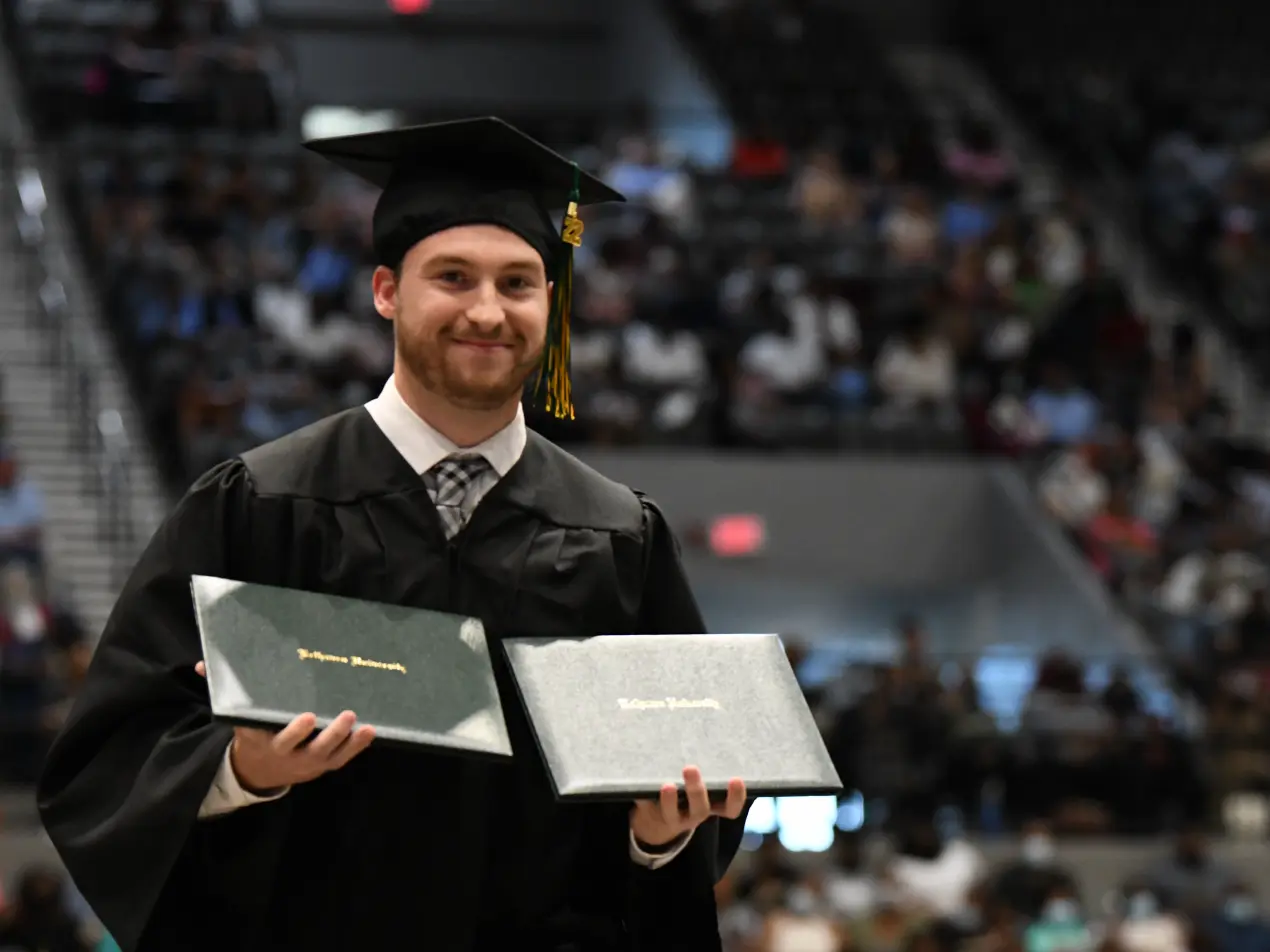
Double Major & Get Your 5th Year Free
Fuel your academic passions and expand your career options. Belhaven offers our freshmen a unique deal: double major, and we’ll pay the tuition if you need a fifth year in school. Double major in two arts programs, pair a business degree with a STEM major … the possibilities are endless!
Learn the Language of Science
Belhaven has an engineering partnership with Mississippi State University. You can take math, science, and engineering courses at Belhaven, transfer to our partner institution, and then receive a B.S. in math from Belhaven and an engineering degree (chemical, civil, mechanical, or general) from the ABET-accredited partner institution — all in a five-year window.
These two versatile and marketable degrees can set you up for a strong engineering career.
As a math major at Belhaven, you can earn either a Bachelor of Science (B.S.) or a Bachelor of Arts (B.A.) in Mathematics. Though there is a lot of course requirement overlap, the B.S. requires additional math electives to prepare students for industry and graduate school, while the B.A. allows room for more liberal arts courses, including pursuing education.
In either degree pathway, you will study the core curriculum of mathematics, calculus, differential equations, discrete math, and others through hands-on projects, technology, and research.
Prepare for your math journey with the Math Placement Test, a one-hour timed assessment designed to evaluate your grasp of fundamental algebra concepts. Based on your performance, you'll be directed towards one of three courses:
- MAT 100 - Intermediate Algebra,
- MAT 101 - College Algebra, or
- MAT 110 - Mathematics for Life.
On test day, bring a pencil and a Texas Instruments TI-30XS calculator. This is the calculator you will be required to use in your math courses.
To schedule an appointment to take the placement test, to receive practice placement test questions, or for any other questions, please email Kathy Hammons.
Math Major: Opportunities for You
Our mathematics seminar meets several times per semester to expose you to math topics not typically covered in a classroom. You’re able to engage with professors and students from different universities and learn about the rich history and beauty associated with this subject.
Friendly competitions are common in the Math Department. There’s a “Question of the Week” competition as well as national problem-solving challenges. The department also hosts the annual and campus-wide math scavenger hunt to help show the abundance and relevance of mathematics around us.
You can join in on the creative development of these competitions and also win prizes by participating in them.
Our computer laboratory is now fully equipped with Wolfram Mathematica, a powerful technical computing system used by numerous research institutions and Fortune 500 companies.
You learn to use this tool throughout the curriculum, and you head up your own research project in MAT 490: Mathematical Investigation. The top research project from MAT 490 receives the Outstanding Research Award.
The “maker movement” — a celebration of creativity, curiosity, hands-on learning, and invention — is alive and well at Belhaven through our Maker Campus. As a STEM student, you’re encouraged to explore your creative side and build projects that solve real-world problems. We empower you with facilities ranging from electronics and printing labs to sculpture studios.
We also promote collaboration, especially with students from our arts programs. By harnessing the power of art and science, there’s no telling what you can accomplish.
The Math & Computer Science Club allows students a community with social events, math and coding student support, and opportunities to join both the Mathematical Association of America (MAA) and The Association for Computing Machinery (ACM).
Meet Our Faculty
Dean of the School of Science and Mathematics, Professor and Yearger Chair of Mathematics and Computer Science, and Director of Engineering Partnerships
John Estes
Dean of the School of Science and Mathematics, Professor and Yearger Chair of Mathematics and Computer Science, and Director of Engineering Partnerships
Specialty Instructor of Mathematics
Kathy Hammons
Specialty Instructor of Mathematics
Assistant Professor of Math
Philip Kains
Assistant Professor of Math
Assistant Professor of Mathematics
Jarrod Mau
Assistant Professor of Mathematics
Contact Us
Office of Admission
Phone: 601-968-5940Mailing Address:
1500 Peachtree Street, Box 153
Jackson, MS 39202
For campus visit:
Jimmy Hood Welcome Center
855 Riverside Drive
Jackson, MS 39202
Fax: 601-300-2932
Verse of the Year
Go and make disciples of all the nations ... And be sure of this: I am with you always, even to the end of the age.
Matthew 28:19-20