
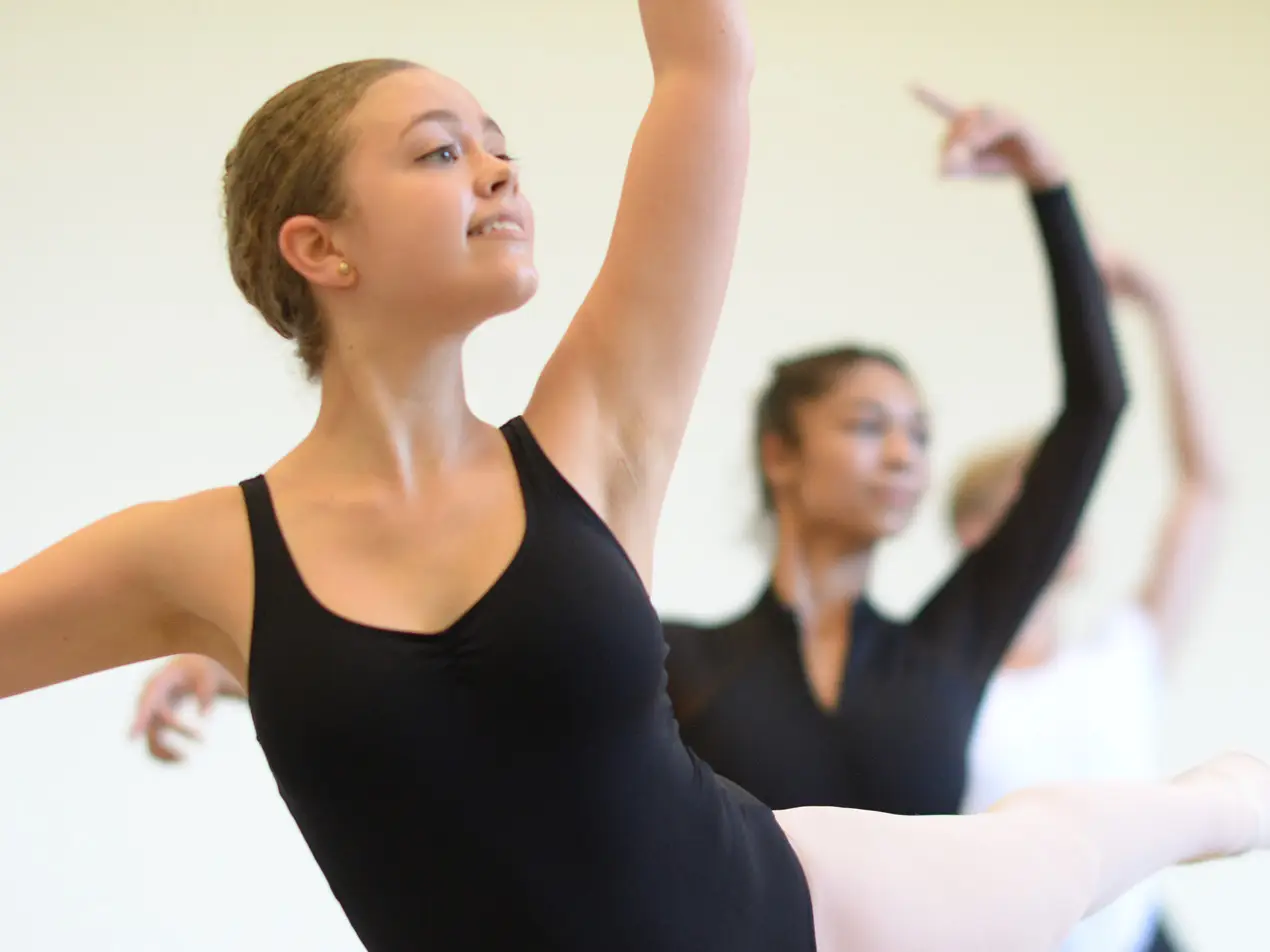
The Belhaven University Dance Department offers an exciting opportunity to enhance your training, expand your knowledge, and prepare you for a future in the world of dance and affiliated careers.
Information as You Prepare to Transition for Study in Dance at Belhaven University
Although the transition from a private dance school to a liberal arts college is adventurous and exciting, you may find many differences and challenges. Our faculty will help you make this transition. Belhaven University's Dance Program offers a diverse curriculum. During your academic experience, the following goals will be emphasized.
- To develop and integrate a Christian worldview into your dance studies.
- To develop skills in technique and performance artistry.
- To gain an understanding of dance through history, theory, pedagogy, and science.
- To develop your artistic voice and ability to craft dance through composition and choreography.
Upon entering our dance program, your prior training may have been focused primarily on developing technical skills and improving performance execution. We encourage you to keep an open mind to new dance opportunities and cultivate a healthy curiosity about all aspects of the art form. The following suggestions are to help prepare you for your collegiate career:
- Attend as many dance performances as you can
- View documentaries and films on dance
- Read about dance in newspapers, magazines, books, and online
- Familiarize yourself with key choreographers of the 20th and 21st century
- Research contemporary dance artists and current dance trends
- Discover new ideas and approaches by taking dance classes from different teachers in a variety of dance forms
Dance Handbook
Please review the Dance Student Handbook for important information.
Important Dates
- Move-in Date To Residence Halls: Thursday, August 13, 2026 from 9am-Noon
- Technique Level Placement Classes: Friday, August 14, 2026 from 8am-12:30pm
(required for incoming freshmen and transfer students; returning students who want to be reevaluated for level placement are invited to participate) - First Day of Classes: Monday, August 17, 2026
- Auditions for Belhaven University Dance Ensemble and Dance Ministry Ensemble: Monday, August 17, 2026 from 4:00-6:00pm
Three medical forms are required prior to participation in dance classes at Belhaven University. Please check your email for these forms and contact vfauntroy@belhaven.edu with any questions.
Placement Classes
*Required level placement classes for incoming freshmen and transfer students are on Friday, August 14, 2026. Returning students who want to be reevaluated for level placement are invited to participate. Please see the schedule listed below.
Friday, August 14, 2026
| Time | Event |
|---|---|
| 8:30 a.m. | Advisors meet with freshmen and transfers in Studio 4 (2nd floor Bitsy Irby Visual Arts & Dance Center) |
| 9:15 – 10:30 a.m. | Modern Dance Level Placement Class in Studio 4 |
| 10:45 a.m. – Noon | Ballet Level Placement Class in Studio 4 |
| Noon – 12:30 p.m. | Pointe Placement in Studio 4 (optional) |
| 12:30 – 1:30 p.m. | Lunch |
| 1:30 – 3:30 p.m. | Advising meetings with freshmen and transfers (15-minute time slots) |
Monday, August 17, 2026
| Time | Event |
|---|---|
| 4:00 – 6:00 p.m. | Auditions for Belhaven University Dance Ensemble and Dance Ministry Ensemble |
Verse of the Year
Go and make disciples of all the nations ... And be sure of this: I am with you always, even to the end of the age.
Matthew 28:19-20